freelance digital marketer near me
Uncategorized

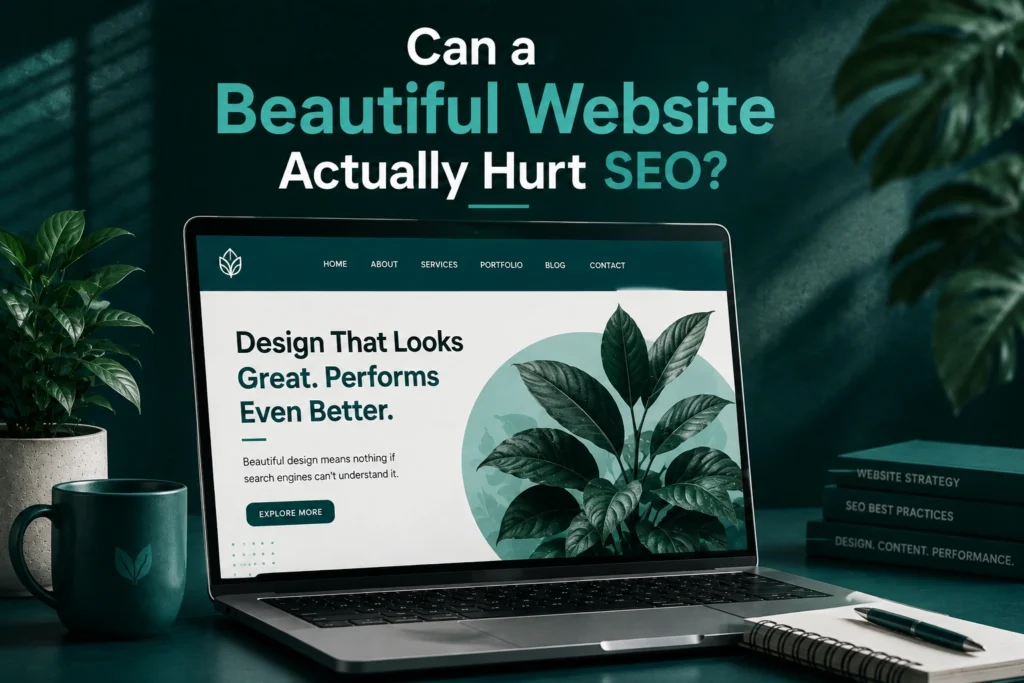
Can a Beautiful Website Actually Hurt SEO?

When Great Design Becomes a Search Problem A beautiful website creates an immediate impression. Modern layouts, elegant typography, smooth animations, high-quality images, and interactive elements can make a brand appear professional and trustworthy. However, visual appeal alone does not guarantee strong search engine performance. In fact, when designers prioritize appearance without considering technical SEO, user experience, accessibility, and website performance, a visually impressive website can create unexpected problems for organic visibility. Search engines evaluate websites through many signals, while users judge websites through both appearance and experience. Therefore, successful web design requires more than making a website look attractive. It requires a careful balance between creativity and functionality. A website should impress visitors while also allowing search engines to crawl, understand, and index its content effectively. Consequently, the best website design does not simply look beautiful; it also supports visibility, usability, and business objectives. 1. When Beauty Becomes a Digital Distraction Modern websites often use large visual elements to create a memorable first impression. Full-screen videos, animated backgrounds, interactive sections, floating elements, and sophisticated transitions can make a website feel premium. Nevertheless, excessive visual decoration can distract visitors from the information they actually need. If users struggle to find a service, product, contact option, or important answer, the website may fail despite its attractive appearance. Moreover, search performance depends partly on how effectively a page satisfies user needs. A visually impressive design that hides important information behind animations or complicated navigation can create friction. Visitors may leave before exploring the website, especially when they cannot quickly understand what the business offers. Therefore, designers should use visual elements to support communication rather than compete with it. The Speed Problem Behind Stunning Design High-quality visuals can significantly improve a website’s appearance. However, large images, background videos, custom fonts, animations, and third-party scripts can increase page weight. As a result, the browser may require more time and resources to load the page. This becomes particularly important for visitors using mobile devices or slower internet connections. Website performance also influences the overall user experience. When a page takes too long to become usable, visitors may abandon it before interacting with the content. Therefore, developers should compress images, use modern image formats where appropriate, reduce unnecessary scripts, and optimize loading behavior. A beautiful page should feel fast as well as look fast. The Hidden Cost of Heavy JavaScript JavaScript allows designers to create impressive interactions. For example, a website can display animated menus, dynamic content, interactive dashboards, and sophisticated transitions. However, excessive dependence on JavaScript can introduce technical challenges. Search engines may need additional resources to process dynamically generated content, while browsers may require more processing power to display the page. Furthermore, important information should not depend unnecessarily on complicated scripts. If essential content, navigation links, or page elements become difficult for search engines to access, the website can lose valuable visibility. Consequently, developers should build a strong HTML foundation and use JavaScript to enhance the experience rather than make it the only method of delivering essential content. When Minimalism Removes Too Much Content Minimalist design has become increasingly popular because it creates clean and sophisticated interfaces. However, minimalism can become problematic when designers remove useful information simply to create more visual space. A page may contain a beautiful headline, a large image, and a short sentence while providing very little meaningful information about the topic. Search engines need understandable content to determine what a page represents and whether it deserves to appear for relevant searches. Therefore, businesses should not confuse simplicity with a lack of information. A minimalist website can still provide comprehensive, useful content through clear headings, concise paragraphs, descriptive labels, FAQs, supporting resources, and relevant internal links. The Typography Trap Typography can completely transform a website’s visual identity. Elegant fonts can communicate luxury, creativity, professionalism, or authority. Nevertheless, designers must remember that typography exists primarily to support readability. Extremely small text, unusual typefaces, low contrast, excessive capitalization, or decorative fonts can make content difficult to consume. In addition, some websites load multiple font families and numerous font variations. This can increase the number of resources the browser must process. Therefore, businesses should select typography carefully and prioritize readability, consistency, accessibility, and performance. A sophisticated font choice should improve communication rather than create another barrier between the visitor and the content. The Mobile Design Reality Check A website may look outstanding on a large desktop screen but perform poorly on a smartphone. This happens when designers create layouts around fixed dimensions, oversized graphics, complex navigation, or interactions that do not translate effectively to smaller screens. Since many users access websites through mobile devices, businesses cannot treat mobile design as an optional feature. Furthermore, mobile visitors often have different expectations. They want important information to appear quickly, buttons to remain easy to tap, text to remain readable, and navigation to remain straightforward. Therefore, responsive design should influence the entire development process from the beginning. A truly beautiful website should adapt naturally to different screen sizes instead of forcing users to work around the design. 7. Navigation: The Difference Between Elegant and Confusing Creative navigation can make a website appear unique. Hidden menus, unusual scrolling systems, interactive navigation bars, and unconventional layouts can create memorable experiences. However, creativity becomes counterproductive when visitors cannot immediately understand how to move through the website. Clear navigation benefits both users and search engines. Visitors can discover important pages more easily, while search engines can better understand relationships between different sections of the site. Therefore, designers should maintain recognizable navigation patterns, descriptive anchor text, logical categories, and useful internal links. A unique navigation system should still feel intuitive. 8. Images Should Tell a Story, Not Slow the Page Professional photography and custom graphics can dramatically improve a website. They can strengthen branding, explain complicated ideas, and make pages more engaging. However, image-heavy websites can experience performance and accessibility problems when designers upload large files without optimization. For that reason, businesses should compress images, select suitable dimensions, provide meaningful alternative
freelance digital marketer
Uncategorized

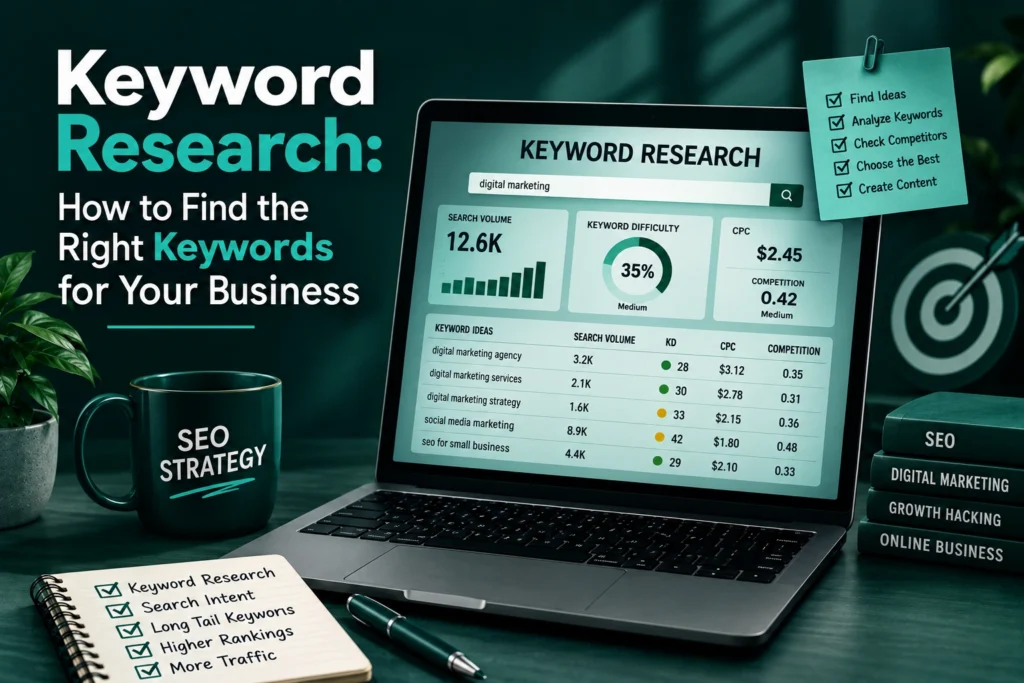
Keyword Research: How to Find the Right Keywords for Your Business

1. The Words That Connect Your Business to Your Customers In the digital world, customers rarely discover a business by accident. Instead, they use search engines to find answers, products, services, and solutions that match their needs. Therefore, businesses need to understand the words and phrases potential customers use when searching online. This process, known as keyword research, provides the foundation for an effective SEO strategy and helps businesses connect their content with the right audience. However, successful keyword research involves much more than finding popular search terms. A keyword may generate thousands of seMoreover, keyword research supports almost every part of an SEO campaign. Businesses can use selected keywords in website pages, blog articles, product descriptions, landing pages, headings, and metadata. Therefore, a well-planned keyword strategy can improve organic visibility while also helping businesses create more useful content for their visitors. arches every month, yet it may produce very few customers if it does not match the business or the user’s needs. Consequently, businesses should focus on relevance, search intent, competition, and conversion potential when selecting SEO keywords. What Is Keyword Research and Why Does It Matter? Keyword research is the process of identifying and analyzing the search terms people enter into search engines. Marketers use this information to understand what their target audience wants and how they search for particular products, services, or information. As a result, keyword research helps businesses create content that responds directly to real search behavior. Start With Your Audience, Not the Keyword Tool Before opening a keyword research tool, businesses should understand their target audience. First, identify who the ideal customers are, what problems they experience, what solutions they seek, and what questions they commonly ask. This approach provides valuable context before marketers begin collecting potential keywords. For example, a digital marketing agency should not immediately target a broad term such as “digital marketing.” Instead, it could consider more specific searches such as “digital marketing agency for small businesses,” “SEO services for local businesses,” or “how to improve local search rankings.” These phrases often provide greater insight into the customer’s needs. Therefore, understanding the audience creates a stronger foundation for selecting relevant keywords. 4. Search Intent: Discover What Users Really Want One of the most important elements of modern keyword research is search intent. Search intent describes the reason behind a user’s search. Although two keywords may appear similar, they can represent completely different goals. Consequently, businesses should understand intent before creating content around a keyword. Generally, search intent falls into several categories. Informational searches seek knowledge, while navigational searches help users find a particular website or brand. Transactional searches indicate an intention to purchase, whereas commercial investigation searches often involve comparing products or services before making a decision. By identifying the correct intent, businesses can create content that satisfies users instead of simply attracting clicks. Search Volume Is Important, But It Is Not Everything Search volume shows how frequently people search for a particular keyword within a specific period. Naturally, businesses often want keywords with high search volume because those terms can potentially generate significant traffic. Nevertheless, high search volume does not automatically mean high business value. Highly competitive keywords can require considerable time, resources, and authority to rank for. In contrast, a more specific keyword with lower search volume may attract visitors who have a stronger interest in a particular product or service. Therefore, businesses should evaluate search volume alongside relevance, competition, and conversion potential rather than using search volume as the only deciding factor. The Power of Long-Tail Keywords Long-tail keywords contain more specific phrases and usually target a narrower search. For instance, “shoes” represents a broad keyword, while “comfortable running shoes for beginners” provides considerably more detail. Because long-tail keywords communicate a clearer need, they can help businesses attract visitors with more specific interests. Furthermore, long-tail keywords can provide opportunities for smaller websites competing against established brands. Instead of attempting to rank immediately for extremely competitive terms, a business can build visibility around highly relevant specific searches. Over time, this approach can strengthen topical authority and create a broader SEO foundation. Keyword Difficulty: Know What You Can Realistically Rank For Keyword difficulty helps marketers estimate how challenging it may be to rank for a particular search term. Although different SEO platforms calculate this metric in different ways, it provides useful guidance when businesses compare potential keywords. A keyword with extremely high competition may require significant authority, high-quality content, strong backlinks, and considerable time to rank effectively. Therefore, businesses should combine keyword difficulty with competitor analysis. Marketers can examine the websites currently appearing on the first page and assess their content quality, domain strength, backlinks, topical authority, and relevance. If large, established websites dominate the results, businesses may achieve faster progress by targeting more specific and less competitive keywords. Thus, realistic keyword selection can make an SEO strategy more sustainable. Use Keyword Research Tools With a Strategic Mindset Modern marketers have access to numerous keyword research tools that provide valuable information about search volume, competition, related keywords, trends, and potential opportunities. Tools such as Google Keyword Planner, Google Search Console, Semrush, Ahrefs, and other SEO platforms can help marketers expand their keyword lists and analyze search behavior. Nevertheless, marketers should not blindly accept every suggestion generated by a tool. A keyword may appear attractive because it has substantial search volume, yet it may have little relevance to the business. Therefore, marketers should evaluate each keyword according to audience relevance, search intent, business value, competition, and content opportunities. Tools provide data, but human judgment determines which keywords deserve priority. Discover Opportunities Through Competitor Research Competitor analysis can reveal valuable keyword opportunities. By studying competing websites, businesses can identify the topics they rank for, the pages that attract organic traffic, and the questions they address. This research can help marketers discover gaps in their own SEO strategy and develop ideas for new content. However, effective competitor research does not mean copying another website. Instead, businesses should identify areas where competitors provide

digital marketing expert
Uncategorized

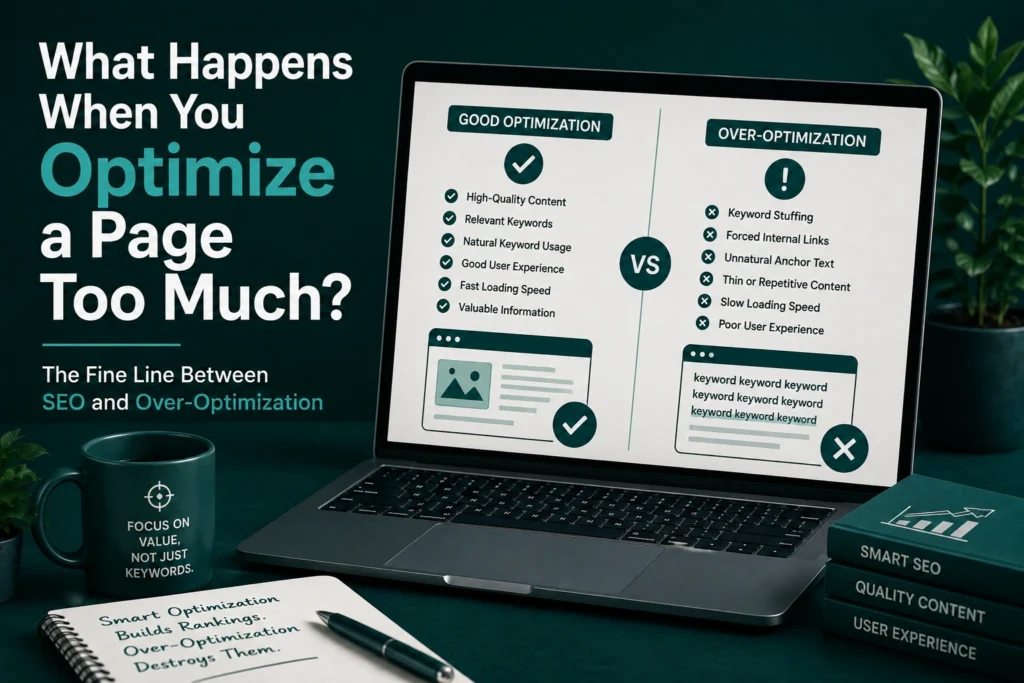
What Happens When You Optimize a Page Too Much? The Fine Line Between SEO and Over-Optimization

Search engine optimization plays an important role in helping websites gain visibility, attract visitors, and build authority online. However, SEO does not mean adding as many keywords, links, headings, or optimization techniques as possible. In fact, excessive optimization can create the opposite result. When website owners focus too heavily on search engines instead of users, they may damage the quality, credibility, and performance of their pages. Therefore, successful SEO requires balance. A well-optimized page should communicate its purpose clearly, provide useful information, offer a good user experience, and make it easy for search engines to understand the content. This article explores what happens when a page is optimized too much, how over-optimization can affect users and search visibility, and how marketers can maintain a healthy SEO strategy. When SEO Goes Too Far SEO over-optimization happens when a website owner applies optimization techniques excessively or unnaturally. For example, a page might repeat the same keyword dozens of times, create unnecessary headings, add excessive internal links, or write content primarily for search engines rather than human readers. Although these techniques may appear beneficial at first, they can reduce the overall quality of a webpage. Furthermore, modern search engines increasingly focus on understanding content quality, relevance, usefulness, and user intent. Consequently, simply adding more optimization elements does not guarantee better rankings. Instead, marketers should focus on creating content that naturally answers the questions users are asking. The Keyword Stuffing Trap One of the most common forms of over-optimization is keyword stuffing. Keyword stuffing occurs when a writer repeatedly inserts the same keyword into a page in an unnatural way. For instance, a digital marketing article might repeatedly use phrases such as “best digital marketing agency” in almost every sentence simply to increase keyword frequency. However, excessive repetition can make content difficult to read. Visitors may quickly notice that the article sounds unnatural or repetitive. As a result, they may leave the website before exploring other pages. Therefore, instead of repeatedly targeting one exact keyword, writers should use related terms, variations, synonyms, and naturally relevant phrases. 3. When Content Starts Sounding Like a Robot High-quality content should communicate naturally with readers. Unfortunately, excessive SEO optimization can make an article sound mechanical. When writers concentrate too much on keyword placement, they may sacrifice clarity, personality, and natural language. Moreover, readers visit websites because they want answers, solutions, ideas, or useful information. They do not want to read sentences created solely to satisfy an optimization checklist. Therefore, content creators should write for people first and optimize for search engines second. A natural writing style usually creates a stronger experience and encourages visitors to stay longer. User Experience Pays the Price Over-optimization can also damage user experience. A webpage filled with unnecessary pop-ups, excessive internal links, large blocks of repetitive text, or poorly structured headings can overwhelm visitors. Even if the page contains valuable information, users may struggle to find what they actually need. In addition, website owners sometimes add optimization elements without considering how they affect page usability. For example, inserting links into almost every paragraph can distract readers from the main message. Similarly, using headings simply because they contain keywords can make the structure confusing. Therefore, every SEO element should serve a genuine purpose. The Hidden Cost of Too Many Internal Links Internal linking is an important SEO technique because it helps users discover related content and helps search engines understand website structure. Nevertheless, adding too many internal links can create problems. When every sentence contains a link, the page may look cluttered and distracting. Readers may also find it difficult to determine which links are genuinely useful. Consequently, internal links should appear where they provide additional value. A good internal linking strategy connects relevant pages naturally rather than placing links everywhere simply for SEO purposes. When Headings Become an SEO Checklist Headings help organize content and improve readability. They also give search engines useful information about the structure of a page. However, headings lose their value when website owners create them only to insert keywords. For example, an article may contain multiple headings that repeat nearly identical phrases. Although this approach may appear optimized, it can make the article feel repetitive and poorly organized. Instead, each heading should introduce a meaningful topic or question. As a result, readers can scan the article easily and understand the information more quickly. Search Rankings Are Not the Only Goal Many marketers make the mistake of treating rankings as the ultimate measure of SEO success. Certainly, search visibility matters. However, high rankings do not automatically produce business results. A page can attract thousands of visitors and still fail to generate leads, sales, inquiries, or meaningful engagement. Therefore, marketers should consider several performance indicators, including organic traffic, engagement, conversions, returning visitors, and user satisfaction. In other words, SEO should support broader business objectives rather than operate as an isolated activity. The Danger of Writing for Algorithms Instead of People Search engines exist to help people find useful information. Therefore, content that genuinely satisfies users has a stronger foundation than content created entirely around algorithms. When writers focus excessively on ranking factors, they may lose sight of search intent. For example, someone searching for “how to improve website SEO” probably wants practical steps rather than a page containing hundreds of repetitions of the phrase “website SEO.” By understanding search intent, marketers can create content that answers the user’s real question. Consequently, the page becomes more useful and naturally incorporates relevant keywords. Quality Beats Quantity Another problem with over-optimization involves the unnecessary expansion of content. Some marketers believe that longer articles automatically perform better. However, adding paragraphs that do not provide meaningful information can reduce content quality. Instead, writers should focus on depth and usefulness rather than word count alone. A detailed explanation, practical example, clear solution, or original insight can provide more value than several paragraphs of repetitive information. Therefore, content length should depend on the topic and user intent rather than an arbitrary target. How Over-Optimization Can Affect

Scroll to Top